Step 1: Preheat the Oven
Preheat your oven to 180°C (160°C fan), Gas Mark 4.
Lightly grease an 8-inch (20cm) springform cake tin with a little cooking spray and line the base with baking parchment.
Step 2: Prepare the Oats
Place the rolled oats into a food processor or blender.
Blend until they resemble a fine flour.
Transfer the ground oats to a large mixing bowl.
Step 3: Mix the Dry Ingredients
Add the baking powder, ground cinnamon and sultanas to the ground oats.
Stir well to distribute the ingredients evenly.
Next, fold in the grated carrot.
Make sure the carrot has been gently squeezed to remove excess moisture, as too much liquid can affect the cake’s texture.
Step 4: Whisk the Wet Ingredients
In a separate bowl, whisk together the eggs and granulated sweetener until well combined and slightly frothy.
Add the lemon juice and fat-free vanilla Greek yoghurt.
Continue whisking until the mixture is smooth.
Step 5: Combine the Cake Batter
Pour the wet ingredients into the oat and carrot mixture.
Using a spatula or wooden spoon, gently stir until everything is combined.
Avoid excessive mixing.
The batter will be slightly thicker than a traditional sponge cake mixture.
Step 6: Bake the Carrot Cake
Transfer the batter to the prepared cake tin.
Spread evenly with the back of a spoon.
Bake in the preheated oven for approximately 55–60 minutes, or until the cake is set and a skewer inserted into the centre comes out clean.
If the top begins to brown too quickly, loosely cover it with foil towards the end of baking.
Step 7: Allow the Cake to Cool
Remove the cake from the oven and leave it in the tin for approximately 10 minutes.
Carefully transfer it to a wire rack and allow it to cool completely.
It’s important that the cake is fully cooled before adding the frosting.
Step 8: Prepare the Light Cream Cheese Frosting
In a small bowl, combine the fat-free vanilla Greek yoghurt, low-fat cream cheese and icing sugar.
Stir gently until smooth and creamy.
If the frosting seems too soft, refrigerate it for 20–30 minutes before using.
For a thicker result, choose a thick, strained Greek yoghurt rather than a runny yoghurt.
Step 9: Assemble the Carrot Cake
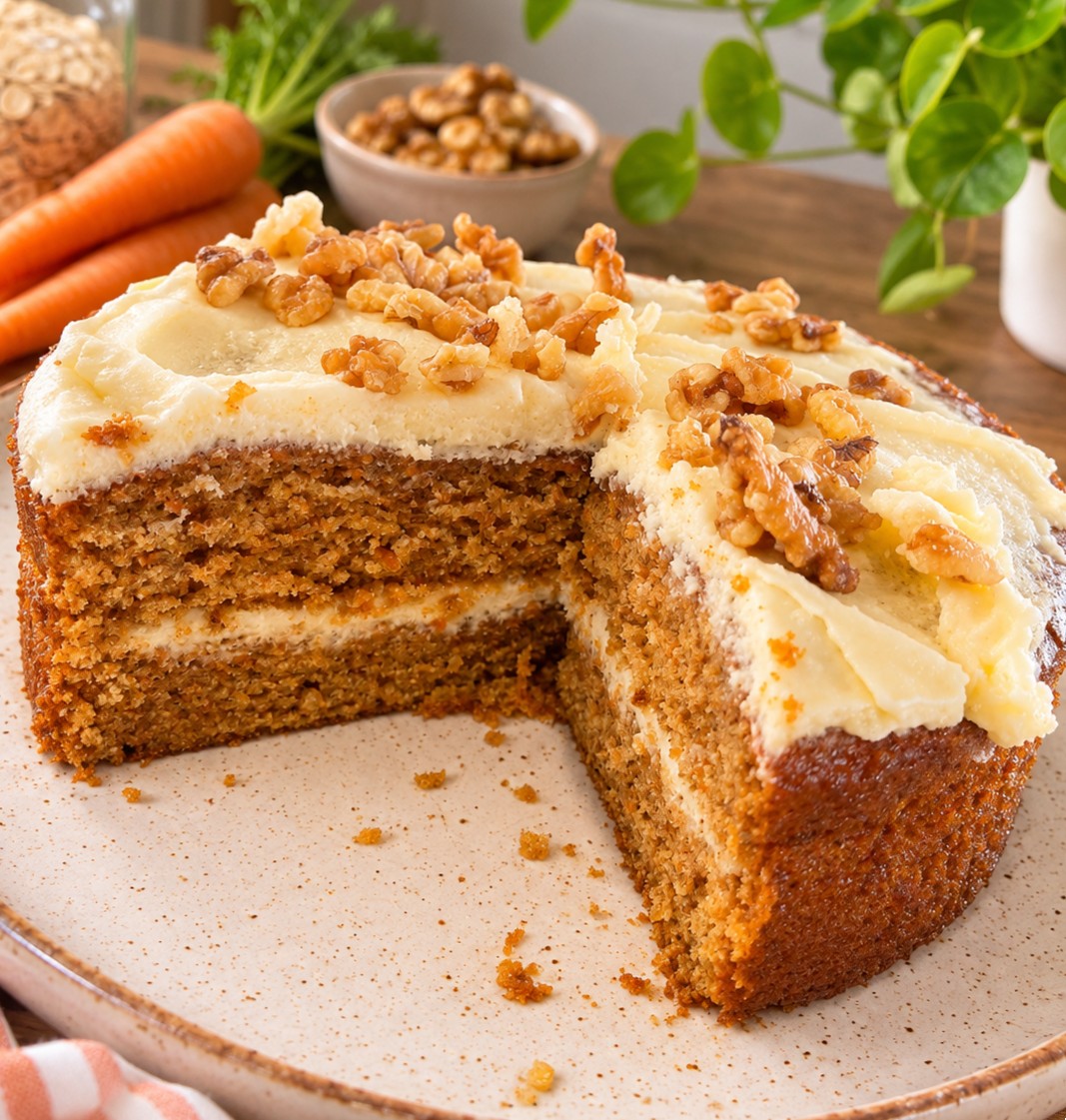
Once the cake is completely cool, cut it into 8 equal wedges.
Spread half of the frosting evenly over 4 of the slices.
Place the remaining 4 slices on top to create four individual double-layer carrot cake portions.
Divide the remaining frosting between the tops.
For a lovely finishing touch, add a few chopped walnuts if desired.
Step 10: Serve and Enjoy
Serve your homemade oat carrot cake with a cup of tea or coffee.
The soft, gently spiced cake and creamy topping make a delicious combination.
Enjoy!
Tips for the Best Healthy Carrot Cake
Blend the Oats Finely
For a smoother cake texture, blend the oats until they resemble fine flour.
Remove Excess Moisture from the Carrot
Grated carrot naturally contains water. Gently squeezing out excess moisture helps prevent the cake from becoming too wet.
Use Thick Greek Yoghurt
Thick fat-free Greek yoghurt works best for both the sponge and frosting.
Let the Cake Cool Completely
Adding frosting to a warm cake can cause it to melt or become runny.
Chill the Frosting
If you prefer a firmer topping, prepare the frosting ahead of time and keep it chilled until you’re ready to serve.
Don’t Expect a Traditional Butter Sponge
Because this carrot cake is made with oats rather than wheat flour and contains no butter or oil in the batter, it has a slightly denser, heartier texture than a traditional carrot cake.
Easy Carrot Cake Variations
Carrot Cake Without Sultanas
If you prefer, leave out the sultanas.
This will change the sweetness and nutritional values of the finished cake.
Carrot and Walnut Cake
Add a few chopped walnuts to the frosting for extra crunch.
Extra Cinnamon Carrot Cake
If you love warming spices, add a small pinch of ground nutmeg alongside the cinnamon.
Simple Oat Carrot Cake
Skip the frosting and enjoy a plain slice of oat carrot cake with your favourite hot drink.
Single-Layer Carrot Cake
Instead of assembling double-layer portions, spread the frosting over the cooled whole cake and cut it into 8 slices.
This is a lovely option if you’re serving a group.
How to Store Healthy Carrot Cake
Because the frosting contains yoghurt and cream cheese, the finished cake should be stored in the fridge.
Keep it in an airtight container and enjoy within 2–3 days.
For the best texture, store the unfrosted cake and frosting separately and assemble just before serving.
Can You Freeze It?
Yes. The unfrosted carrot cake can be frozen for up to 2 months.
Wrap individual slices securely and place them in a freezer-safe container.
Defrost in the fridge before serving.
For the best results, prepare the cream cheese frosting fresh.
Frequently Asked Questions
Can I make carrot cake with oats instead of flour?
Yes! Finely blended rolled oats work well in this recipe and give the cake a slightly hearty, satisfying texture.
Is this carrot cake lower in fat than traditional carrot cake?
It can be, as the batter contains no butter or added oil and uses fat-free Greek yoghurt.
However, the exact fat content depends on the ingredients and portion sizes.
Can I use porridge oats?
Yes. Ordinary rolled porridge oats work well when blended into a fine flour.
Can I make this carrot cake without sugar?
The cake batter uses granulated sweetener instead of regular sugar, although the sultanas contain naturally occurring sugars.
The frosting also contains a small amount of icing sugar.
Why is my carrot cake dense?
Oat-based cakes naturally have a denser texture than traditional flour-based sponges.
Blending the oats finely, using the correct baking powder quantity and avoiding excessive moisture can help improve the result.
Can I make the frosting thicker?
Yes. Use a thick Greek yoghurt, avoid overmixing and chill the frosting before spreading.
Can I add walnuts?
Absolutely! Chopped walnuts make a delicious addition, particularly when sprinkled over the cream cheese frosting.
Just remember that adding walnuts changes the nutritional content.
Is this cake suitable for a lighter dessert?
It can be a lovely lighter alternative to some traditional carrot cakes because it uses oats, fat-free yoghurt, a measured amount of sweetener and a modest quantity of cream cheese.
Portion size and ingredient choices still matter.
Final Thoughts
This healthy carrot cake with oats is a lovely way to enjoy a comforting homemade bake with a few lighter ingredient choices.
With its warming cinnamon flavour, soft carrot and oat sponge, sweet sultanas and creamy frosting, it’s a delicious treat that feels special without requiring complicated ingredients.
Whether you’re enjoying a slice with your afternoon cuppa or sharing it with family, this easy oat carrot cake is definitely worth adding to your baking collection!