Are ‘Healthy Fats’ a Myth? A Scientific Comparison of Omega-3 vs. Omega-6 and Their Sources

Introduction: Decades of Fat Fear, and the Secret We Know Now!

For decades, fat was vilified as the primary culprit behind weight gain and heart disease. While that fear led to shelves full of low-fat, high-sugar alternatives, the truth is far more complex: fats are essential. The real challenge isn’t avoiding fat; it’s understanding the crucial difference between the types of fat and, most importantly, achieving the right balance.

At psyourhealthmatter, we aim to empower you with science-backed knowledge. This article breaks down why certain fats are vital for your brain and heart health, and how an imbalance is sabotaging your wellness goals.


Classifying Fats: Saturated vs. Unsaturated

Before diving into Omega fats, it’s helpful to briefly categorize the three main types:

  1. Trans Fats (The Real Enemy): Artificially created via hydrogenation. Found in processed baked goods and some fried fast foods. These should be avoided entirely as they significantly raise bad cholesterol (LDL).
  2. Saturated Fats: Found mainly in animal products (red meat, full-fat dairy). Necessary in moderation, but excess consumption can be linked to cardiovascular risk.
  3. Unsaturated Fats (The “Good” Fats): Found in plant foods, nuts, and fish. These are the fats we need to prioritize.

Essential Fats: Omega-3 and Omega-6 – A Balance That Must Be Set

The most critical unsaturated fats are the Essential Fatty Acids (EFAs)

1. Omega-3: The Anti-Inflammatory Hero
  • Role: Omega-3s (EPA and DHA) are fundamental building blocks for cell membranes, particularly in the brain and retina. They are potent anti-inflammatory agents.
  • Benefits: Reduced risk of heart disease, improved mood, sharper focus, and less joint pain.
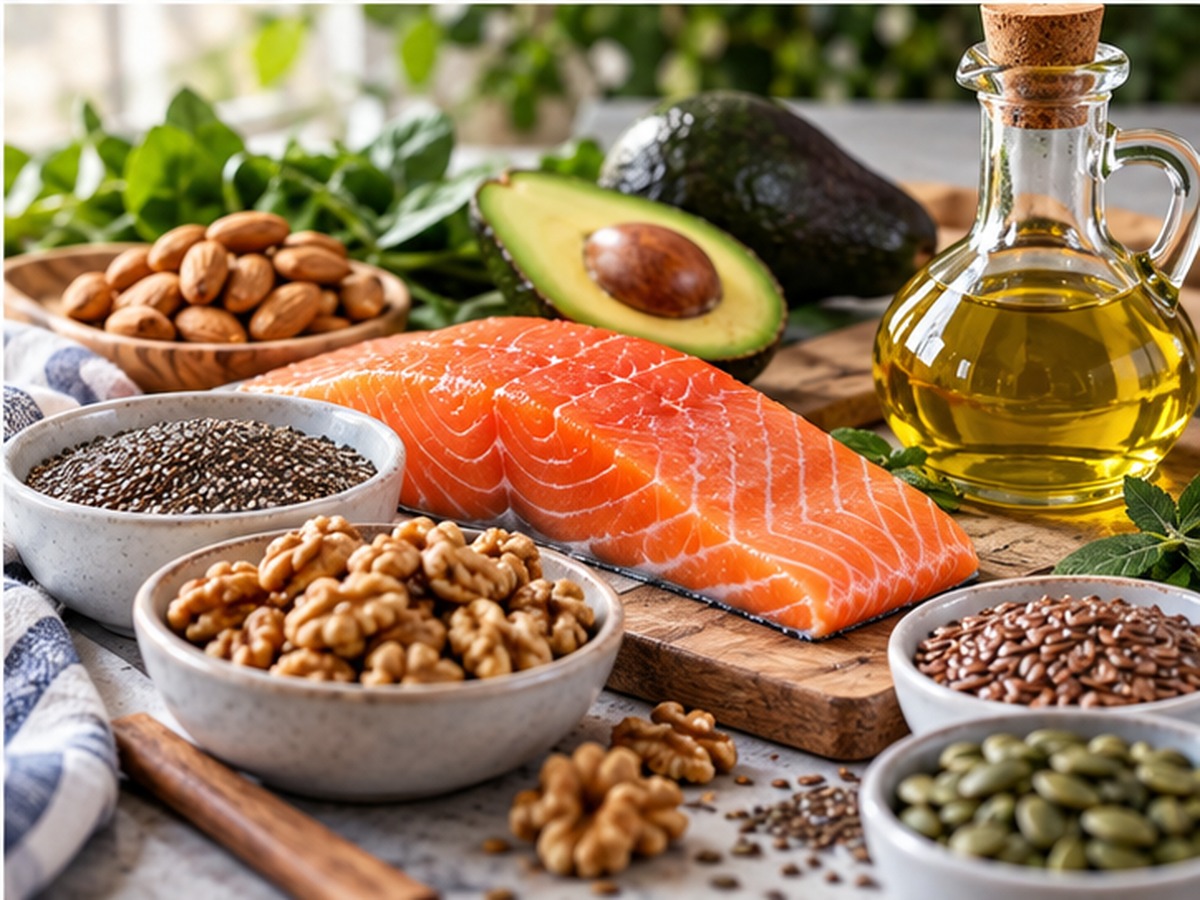
  • Best Sources: Fatty fish (Salmon, Mackerel, Sardines), walnuts, flaxseeds, and chia seeds.
2. Omega-6: Necessary, But Often Excessive
  • Role: Omega-6s are also essential for energy and healthy skin/hair.
  • The Problem: The modern Western diet is overloaded with Omega-6, mainly from vegetable and seed oils (corn, soybean, sunflower) used heavily in processed foods and restaurant cooking.
  • The Imbalance: While Omega-6 is necessary, consuming too much relative to Omega-3 can promote inflammation—the root cause of many chronic diseases.

The Golden Ratio: Aim for Balance

The ideal ratio of Omega-6 to Omega-3 should be around 1:1 to 4:1. However, the typical Western diet ratio often exceeds 10:1 or even 20:1! This imbalance is detrimental to your health.


5 Daily Sources of “Good Fats” to Integrate into Your Diet

To correct the imbalance, focus on dramatically increasing your Omega-3 intake and moderating your Omega-6 intake:

  1. Fatty Fish: Aim for 2-3 servings of salmon, sardines, or mackerel per week.
  2. Extra Virgin Olive Oil (EVOO): Use as your primary fat for salad dressings and general cooking (avoid high heat).
  3. Avocados: Excellent source of monounsaturated fats. Perfect for toast, salads, or smoothies.
  4. Nuts and Seeds: Snack on walnuts (highest Omega-3 content among nuts) and almonds. Add chia or flaxseeds to your oatmeal.
  5. Omega-3 Enriched Eggs: Look for eggs fortified with Omega-3.

Conclusion and Call to Action

The myth that all fats are bad has been debunked. The key to successful nutrition is intelligent selection. By consciously increasing your Omega-3 intake and being mindful of hidden Omega-6 sources, you are fueling your body and brain with the building blocks they truly need.

Your Challenge: Check your pantry today! If you are cooking with corn, soybean, or sunflower oil, switch immediately to a healthier alternative like Olive Oil or Avocado Oil.

Share in the comments: What is your favorite Omega-3 source?