Step 1: Prepare the Aromatic Paste
Place the garlic cloves, fresh ginger and deseeded red chilli into a small food processor.
Blend until you have a fairly smooth paste.
This fragrant mixture creates the flavour base for the sauce.
If you don’t have a food processor, finely mince the ingredients using a sharp knife.
Step 2: Make the Savoury Sauce
Lightly spray a non-stick saucepan with cooking spray and place over a medium heat.
Add the garlic, ginger and chilli paste.
Cook for approximately 30 seconds, stirring continuously, until fragrant.
Add the crumbled beef stock cube, tomato purée, Marmite and 300ml water.
Stir until everything is well combined.
Allow the mixture to simmer gently for 10 minutes.
Next, add the rice vinegar and reduced-salt soy sauce.
Bring the sauce briefly to the boil, then remove from the heat and set aside.
Step 3: Cook the Noodles
While the sauce is simmering, bring a large saucepan of water to the boil.
Add the dried soba noodles or medium egg noodles and cook according to the packet instructions.
Once tender, drain thoroughly and set aside.
Avoid overcooking the noodles, as they will be heated again when combined with the sauce.
Step 4: Stir-Fry the Beef
Heat a large non-stick wok or frying pan over a high heat.
Lightly coat the pan with cooking spray.
Add the thinly sliced sirloin steak and stir-fry for approximately 3–5 minutes, depending on the thickness of the strips and your preferred doneness.
Cook in batches if necessary to prevent overcrowding.
Transfer the beef to a plate and set aside.
Step 5: Cook the Vegetables
Lightly spray the wok again with cooking spray.
Add the mixed stir-fry vegetables along with a small splash of water.
Stir-fry over a high heat for approximately 3–4 minutes.
The vegetables should be tender but still retain a little crunch.
Carrots, mangetout and peppers add lovely colour and texture to the finished dish.
Step 6: Combine Everything
Return the cooked beef and any resting juices to the wok.
Add the drained noodles and prepared sauce.
Using tongs or two large spoons, gently toss everything together until the beef, noodles and vegetables are evenly coated.
Bring to a gentle simmer and heat until everything is piping hot.
Step 7: Adjust the Flavour
Taste the sauce and stir in the optional sweetener if you prefer a slightly sweeter finish.
The sweetener helps balance the savoury soy sauce, tangy vinegar and warming ginger.
If the sauce seems too thick, add a small splash of water.
If it’s too thin, let it simmer briefly, stirring frequently, until it reaches your preferred consistency.
Step 8: Serve and Enjoy
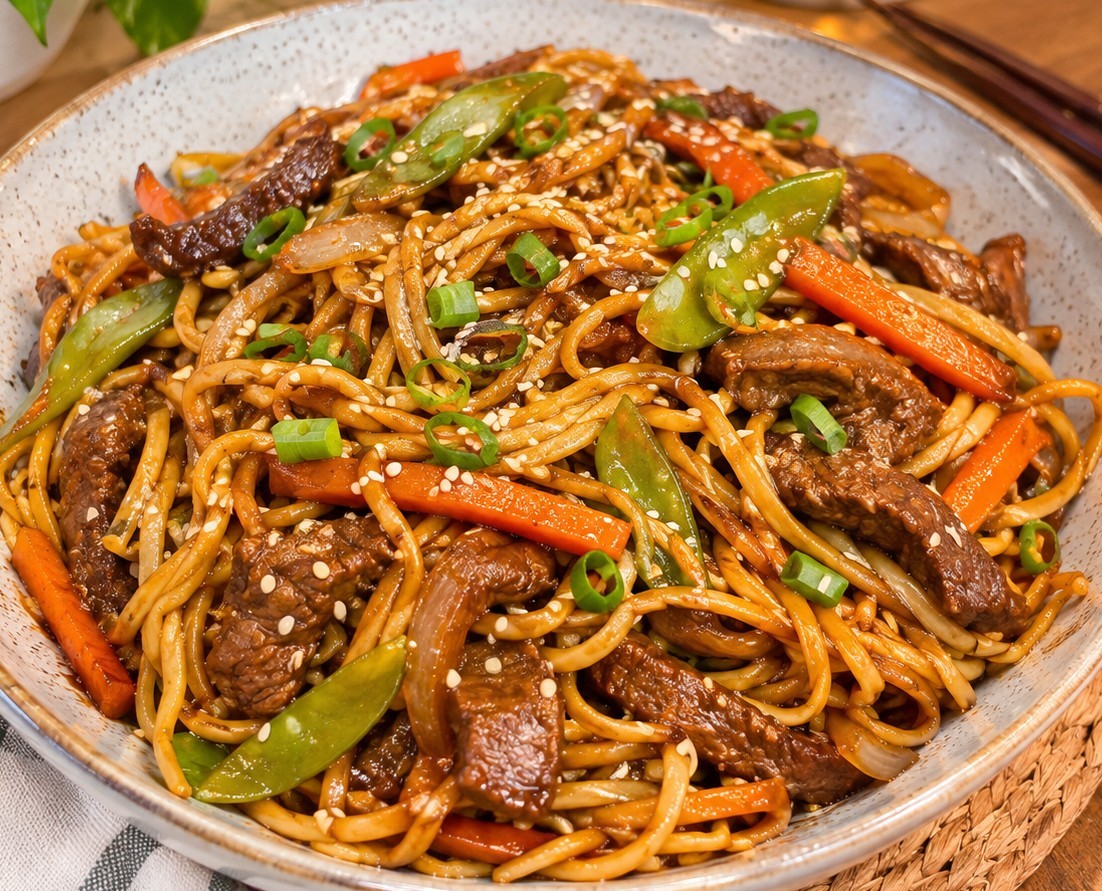
Divide the Korean beef noodles evenly between four serving bowls.
Serve immediately while the noodles are hot and the sauce is beautifully glossy.
Enjoy this comforting homemade dinner!
Tips for the Best Korean Beef Noodles
Choose Lean Beef
Sirloin steak is an excellent choice for this recipe because it cooks quickly and stays tender when sliced thinly.
Trim away any visible fat before cooking.
Slice Against the Grain
For the most tender beef, cut the steak into thin strips against the grain.
This helps prevent the meat from becoming chewy.
Don’t Overcook the Vegetables
Stir-fried vegetables taste best when they still have a little bite.
Cooking them for just a few minutes helps preserve their colour and texture.
Use a Hot Wok
A properly heated wok allows the beef to brown quickly rather than steam.
If your pan is small, cook the beef in batches.
Adjust the Chilli
For a milder family-friendly dinner, use less chilli.
If you prefer more heat, leave some of the chilli seeds in the sauce.
Let the Sauce Coat the Noodles
Toss the noodles gently through the sauce until every strand is coated.
This gives the dish its delicious takeaway-style finish.
Delicious Variations to Try
Chicken Noodle Stir Fry
Replace the sirloin steak with thinly sliced skinless chicken breast.
Cook the chicken thoroughly before combining it with the noodles and vegetables.
Extra Vegetable Beef Noodles
Add more mushrooms, broccoli, shredded cabbage or bean sprouts for extra vegetables.
Spicy Korean-Inspired Noodles
Add a little extra fresh chilli or a pinch of chilli flakes if you enjoy a spicier dinner.
Beef and Mangetout Noodles
Choose a vegetable mixture with plenty of mangetout and carrots for a colourful, crunchy finish.
Soba Noodle Stir Fry
Use dried soba noodles for a slightly different texture and flavour.
What to Serve with Korean Beef Noodles
These noodles make a complete meal on their own, but you can also serve them with a few simple accompaniments.
Steamed broccoli: A lovely way to add extra greens.
Cucumber salad: Fresh cucumber provides a refreshing contrast to the savoury sauce.
Stir-fried cabbage: A simple, budget-friendly side dish.
Extra mangetout: Adds crunch and freshness.
Fresh spring onions: Scatter over the finished noodles for a little extra flavour.
How to Store Leftovers
Allow the cooked noodles to cool quickly before transferring them to an airtight container.
Refrigerate promptly and consume within 24 hours.
Reheating
Place the noodles in a non-stick frying pan with a small splash of water.
Heat over a medium heat, stirring frequently, until piping hot throughout.
Alternatively, reheat in the microwave, stirring halfway through.
Only reheat leftovers once.
Can You Freeze Korean Beef Noodles?
The cooked beef and sauce can be frozen separately in an airtight, freezer-safe container for up to 2 months.
For the best texture, prepare fresh noodles and vegetables when you’re ready to serve.
Frequently Asked Questions
Are Korean beef noodles easy to make at home?
Yes! This recipe uses simple supermarket ingredients and takes approximately 40 minutes from start to finish.
Can I use a different cut of beef?
Absolutely. Lean rump steak or another tender, quick-cooking cut can be used instead of sirloin.
Can I make these beef noodles less spicy?
Yes. Simply reduce the amount of red chilli or leave it out altogether.
The garlic, ginger and soy sauce will still provide plenty of flavour.
Can I use egg noodles instead of soba noodles?
Yes. Both dried soba noodles and medium egg noodles work well in this recipe.
Follow the cooking instructions on the packet before adding them to the wok.
How do I make the sauce thicker?
Allow the sauce to simmer uncovered for a little longer, stirring frequently.
It will become more concentrated as some of the liquid evaporates.
Can I prepare this recipe ahead of time?
Yes. You can prepare the aromatic paste, slice the vegetables and cut the beef ahead of time.
Keep everything covered and refrigerated until you’re ready to cook.
Are these beef noodles suitable for a lighter dinner?
They can be a good option when you’re looking for a lighter homemade takeaway-style meal.
The recipe uses lean sirloin steak, plenty of vegetables, measured noodles and cooking spray instead of large quantities of oil.
The final nutritional values depend on the exact ingredients and brands used.
Final Thoughts
These Korean beef noodles are a delicious way to bring takeaway-inspired flavours into your own kitchen.
With tender strips of lean beef, colourful vegetables, soft noodles and a rich garlic, ginger and soy sauce, every mouthful is packed with flavour.
They’re easy enough for a busy weeknight, satisfying enough for a family dinner and a wonderful alternative to ordering a takeaway.
If you love quick, comforting noodle recipes, this Korean-inspired beef stir fry is definitely one to add to your weekly meal plan!